Process-matched builds
Heavy split cowhide for stick and MIG, medium goatskin for general fabrication, thin goatskin for TIG. One glove does not cover all three well.
Split cowhide · 14 in gauntlet
Split cowhide gauntlets for stick and MIG, thin goatskin for TIG — heat, sparks and spatter without losing the wire hand.
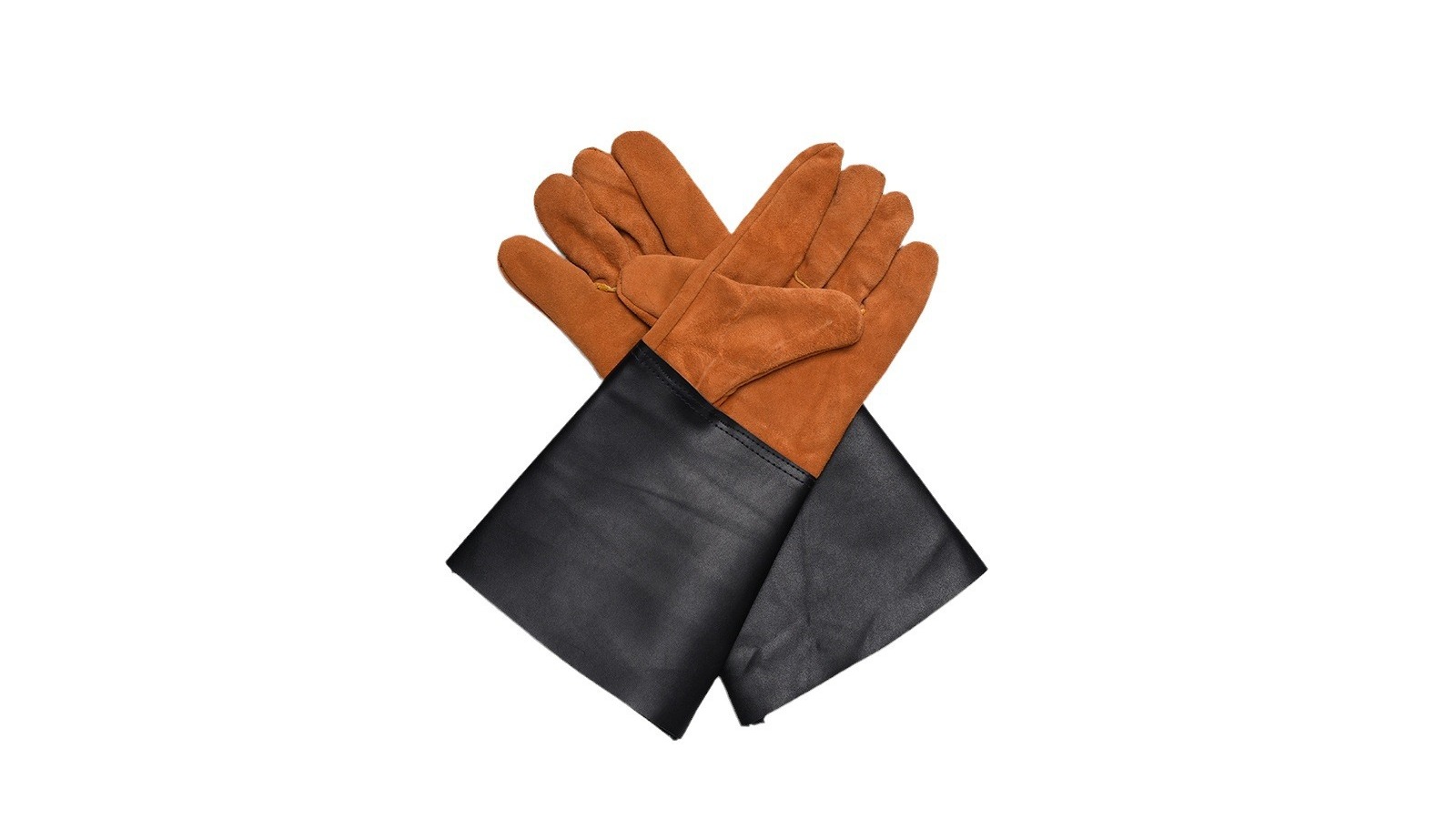
Welding gloves are chosen by process. Stick and MIG throw spatter and need a thick split-cowhide gauntlet with a wide cuff. TIG needs finger feel to feed wire, so a thin goatskin glove with a short cuff works better than a heavy gauntlet that fights every movement.
The seams matter as much as the leather. Welted seams keep sparks out, Kevlar-type stitching survives contact heat, and a reinforced thumb crotch holds up where the rod hand rests against the work.
The three failure modes we see on welding orders are burn-through at the cuff, fingers that stiffen after a week, and a glove too thick to feel the torch. Split leather takes spatter better than a thin chrome-tanned hide, a gauntlet cuff keeps sparks out of the wrist, and a heat-resistant seam stops the glove unravelling along the finger gussets. Tell us the process — MIG, stick or TIG — because TIG needs a thin, sensitive glove while stick welding needs thickness and a long cuff.
Reviewed · Specs confirmed on the approved sample
Heavy split cowhide for stick and MIG, medium goatskin for general fabrication, thin goatskin for TIG. One glove does not cover all three well.
Welted seams, a gauntlet cuff that overlaps the sleeve and a reinforced thumb crotch stop spatter reaching the skin at the points where it usually gets in.
Leather thickness is concentrated on the palm, thumb and cuff — the surfaces that meet hot work — rather than making the whole glove rigid.
Reference
Ratings depend on liner, gauge and coating. Final values are confirmed on the approved sample.
The process sets the leather and cuff. Going heavier than the process needs costs finger feel without adding protection.
| Process | Glove | Cuff | Why |
|---|---|---|---|
| Stick (SMAW) | Heavy split cowhide | 14 in gauntlet | Spatter and radiant heat |
| MIG (GMAW) | Split cowhide or pigskin | 14 in gauntlet | Spatter plus wire control |
| TIG (GTAW) | Thin goatskin | 4–5 in cuff | Finger feel for filler wire |
| Spot / resistance | Goatskin or nitrile-dipped | Short cuff | Light spatter, dexterity |
Questions buyers ask
If your question is about a specific style, send the spec and we will answer with the sample plan instead of a generic reply.
A thin goatskin glove with a short cuff. TIG produces little spatter but requires precise filler-wire control, so a heavy gauntlet is counterproductive.
Leather resists contact heat and spatter, but welding gloves are not furnace gloves. For sustained contact with hot parts, specify a heat-resistant glove rated for the temperature and duration.
Yes. Embossed or printed logos on the cuff, plus woven labels and custom cartons, are available for private-label orders.
It depends on process and handling. Failure usually starts at the thumb crotch or the cuff seam; reinforcement at those points extends life more than a thicker palm.
Next step
Share the glove type, liner and coating, quantities and destination. We reply with the sample plan, unit price at your quantity and the packaging options for your market.