Cheap enough to stock
Jersey gloves are the lowest-cost option in the range, which makes them practical for visitors, light tasks and overflow crews where a coated glove would be wasted.
7 oz & 8 oz cotton jersey
The light general-duty glove: cotton jersey, knit wrist, optional PVC dots — inexpensive, breathable and easy to reorder by the bale.
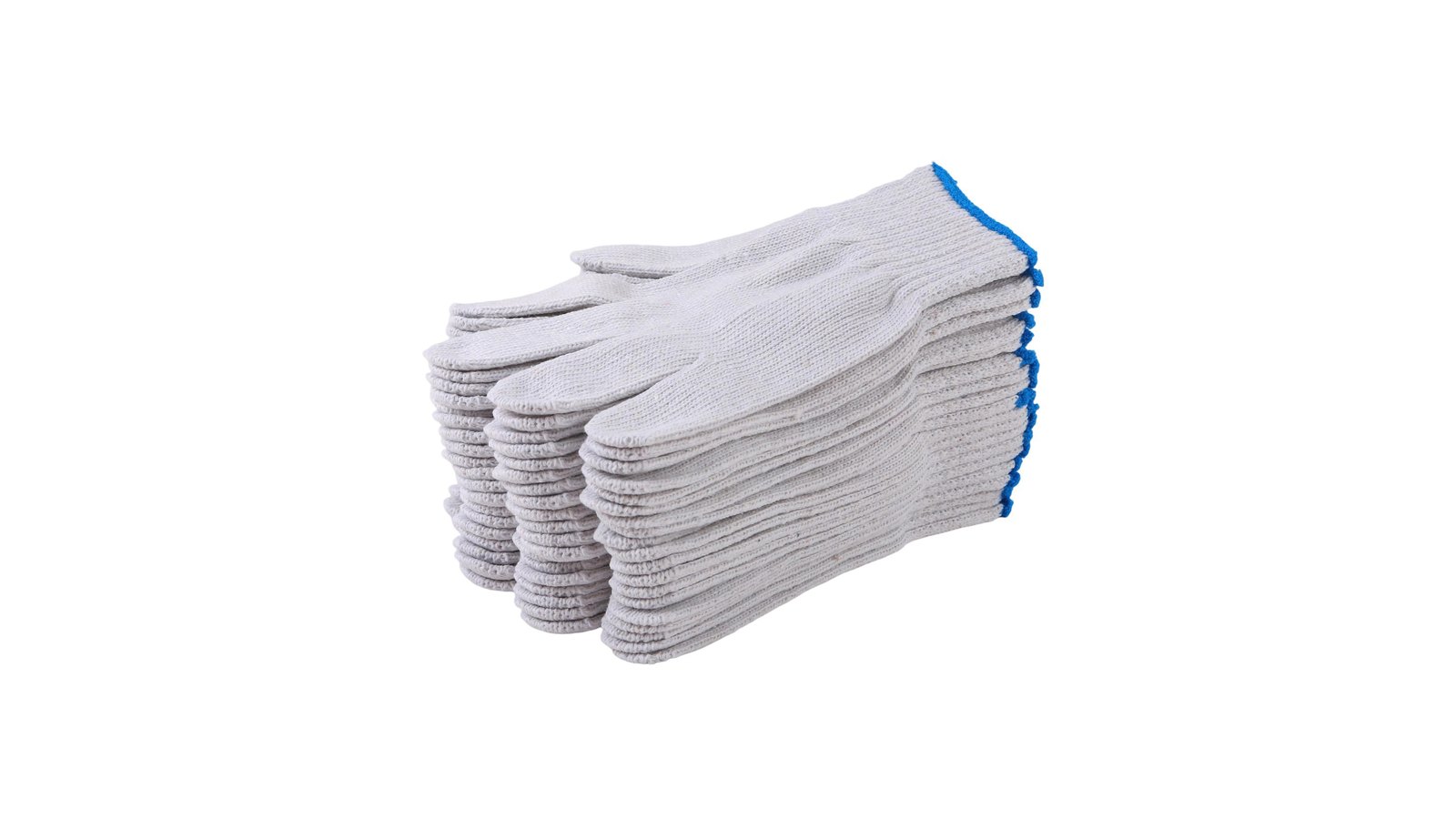
Jersey gloves are the base layer of every glove program. They keep hands clean, reduce minor abrasion and give a bit of warmth without reducing feel. For handling that does not involve sharp edges or oil, they are often enough — and they cost a fraction of a coated glove.
We make them in 7 oz and 8 oz cotton jersey, clute cut for a straight, comfortable fit, with knit wrist or band top. PVC dots on one or both palms add grip for handling cartons, bricks and timber.
Weight is the usual first question. 7 oz is the lightest build and where most sites start; 8 oz feels noticeably more substantial in the hand and lasts longer on rough concrete and timber for a small cost increase. For visitors and one-off tasks, plain 7 oz with a knit wrist is enough. For a yard or loading crew that wears the glove every day, 8 oz with dots on both sides holds up better and can be worn on either hand, which halves the sorting problem when gloves come back from the wash.
Alongside jersey we also build cotton cloth and cotton canvas gloves: a heavier cotton shell for buyers who want more abrasion life than jersey but do not need a coated palm. The pattern is the same clute cut with a knit wrist or band top, so sizing and reordering stay simple.
Reviewed · Specs confirmed on the approved sample
Jersey gloves are the lowest-cost option in the range, which makes them practical for visitors, light tasks and overflow crews where a coated glove would be wasted.
Open cotton knit lets heat out. In warm warehouses that matters more than abrasion resistance, because the glove stays on.
PVC dots on one or both sides improve grip on boxes, bricks and timber, and add a little abrasion resistance at the contact points.
Reference
Ratings depend on liner, gauge and coating. Final values are confirmed on the approved sample.
Plain knit wrist is the cheapest build; band top sits higher and stays on in yard work. Dots are worth adding only where the load is dry and smooth.
| Build | Weight | Grip | Typical use |
|---|---|---|---|
| Plain jersey, knit wrist | 7 oz | Low | Packing, light handling, visitors |
| Plain jersey, band top | 8 oz | Low | General duty, yard work |
| PVC dotted one side | 8 oz | Medium | Cartons, bricks, timber |
| PVC dotted both sides | 8 oz | Medium–high | Reversible use, rough handling |
| Cotton cloth, band top | 8 oz | Low | General duty, housekeeping, distribution |
| Cotton yarn, PVC dotted | 8 oz | Medium | Packing, garden and yard work |
| Cotton canvas, clute cut | Quoted per style | Low–medium | Masonry, landscaping, timber |
Gram weights follow the yarn build scale; the weight basis is confirmed on the approved spec.
| Build | Yarn weight | Density | Typical use |
|---|---|---|---|
| Light | 400 g | Dense | Packing, inspection, liner under a coated glove |
| Light–medium | 500 g | Dense | General handling, warehouse |
| Medium | 600 g | Medium–heavy | Yard, loading, general duty |
| Medium–heavy | 650 g | Heavy | Construction support, rough handling |
| Heavy | 750 g | Heavy | Rough handling, cold weather |
| Extra heavy | 800 g | Extra heavy | Heavy duty, cold outdoor work |
Questions buyers ask
If your question is about a specific style, send the spec and we will answer with the sample plan instead of a generic reply.
No. Cotton jersey offers no meaningful cut protection. If the task involves sharp edges, step up to an HPPE or glass-fiber liner with a rated cut level.
Clute cut uses a straight thumb and fewer seams, which is cheaper and comfortable for light work. Gunn cut places seams away from wear points and is used for heavier leather gloves.
Yes, they can be machine-washed and reused a limited number of times. They are usually treated as a consumable and replaced when soiled or worn through.
Yes. Printed logos on the back of the hand can be added as part of a private-label order, typically from 1,000 pairs per style.
Yes. Cotton cloth and cotton canvas gloves are built on the same clute pattern, with knit wrist or band top. Canvas is the heavier option for masonry, landscaping and timber handling; jersey stays the lighter, breathable choice for packing and general duty.
Yes, as a separate knit family: 13G or 15G seamless nylon with a PU or nitrile palm, used for light assembly, inspection and packing. Nylon is thinner and dries faster than cotton jersey, and it is specified where lint and fit matter. The nylon-liner builds are on the PU coated gloves page.
Next step
Share the glove type, liner and coating, quantities and destination. We reply with the sample plan, unit price at your quantity and the packaging options for your market.