Hide matched to the job
Cowhide for abrasion and heat, goatskin for feel and dexterity, pigskin for wet-dry flexibility. We do not sell one hide as a universal answer.
Split cowhide · goatskin · grain
Split cowhide, goatskin and grain leather for heat, abrasion and grip that coated knits cannot survive.
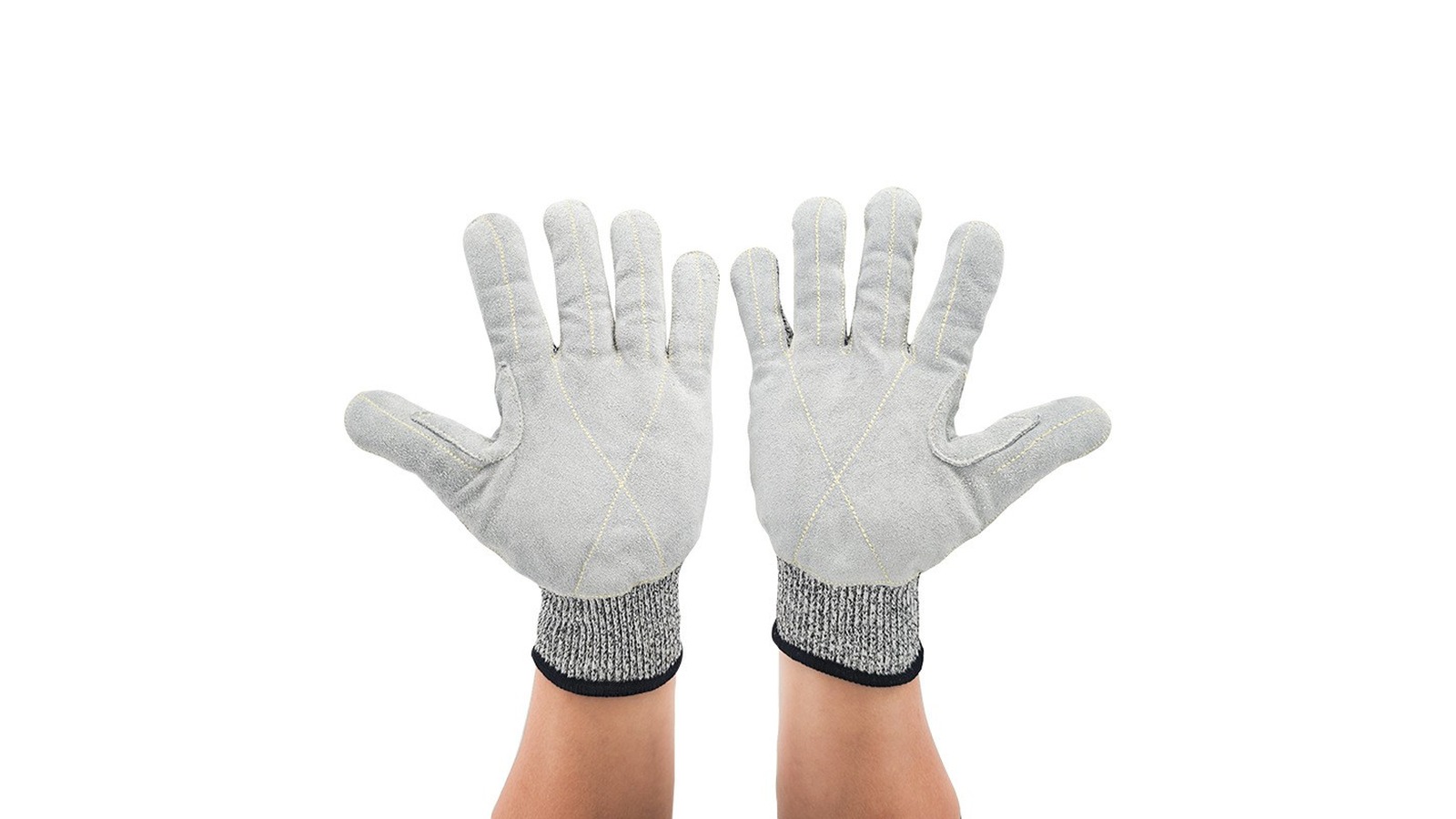
Leather work gloves remain the right answer where the surface is hot, rough or grabby. Split cowhide takes abrasion and sparks, goatskin gives the best feel-to-durability ratio, and grain pigskin stays soft after repeated wet-dry cycles. The cut and the seam placement matter as much as the hide.
We build Gunn cut and clute cut patterns with keystone or wing thumbs, welted seams in high-wear areas and optional palm patches. Cuffs range from knit wrist to 14-inch gauntlet for welding and furnace work.
Tell us what fails first on the glove you use now: the palm, the fingertips, the seam at the thumb or the cuff. Each points at a different fix — a palm patch, a thicker hide, a welted seam or a different cut. That single answer is worth more than a specification list, because it tells us where the load actually goes on the hand.
Reviewed · Specs confirmed on the approved sample
Cowhide for abrasion and heat, goatskin for feel and dexterity, pigskin for wet-dry flexibility. We do not sell one hide as a universal answer.
Gunn cut puts the seam away from the wear point; keystone thumb improves grip and reduces twisting. These details decide comfort more than the logo does.
Palm patches, thumb crotch reinforcement and welted seams extend life in rigging and masonry, where the first failure is always the same spot.
Reference
Ratings depend on liner, gauge and coating. Final values are confirmed on the approved sample.
Choose by the failure you see: split cowhide for sparks and abrasion, goatskin where feel and durability both matter, pigskin where the glove cycles between wet and dry.
| Leather | Abrasion | Heat | Feel | Best for |
|---|---|---|---|---|
| Split cowhide | High | High | Low–medium | Welding, masonry, heavy handling |
| Goatskin | Medium–high | Medium | High | Rigging, driving, general site work |
| Grain pigskin | Medium | Medium | High | Wet-dry handling, farming, logistics |
| Grain cowhide | High | Medium | Medium | Driving, fork lift, general purpose |
Questions buyers ask
If your question is about a specific style, send the spec and we will answer with the sample plan instead of a generic reply.
Split leather comes from the lower layers of the hide and is tougher and more abrasion-resistant. Grain leather keeps the outer surface, so it is smoother, more flexible and better for feel.
Yes, split cowhide gauntlets are the standard for stick and MIG welding. For TIG, a thinner goatskin glove gives the finger control needed to feed wire.
They can be wiped and air-dried, but soaking leather degrades it. For washable heavy-duty work, a coated knit is usually the better choice.
Yes — embossed or printed logo on the cuff or back, woven labels and custom carton marks. Branding is confirmed on the sample before bulk. Laser engraving is not recommended on split leather, because the burnt edge hardens and cracks as the glove flexes. A debossed leather patch is a more durable mark on split hide.
Next step
Share the glove type, liner and coating, quantities and destination. We reply with the sample plan, unit price at your quantity and the packaging options for your market.