What the number means
A4 means the liner withstood 1,500 g of load in the test. It is a relative comparison between materials, not a promise about a specific blade, speed or angle on your line.
Guide · ANSI/ISEA 105 cut levels
A1 to A9 in plain terms: what the test measures, what each level means on the floor, and how to choose without over-buying.
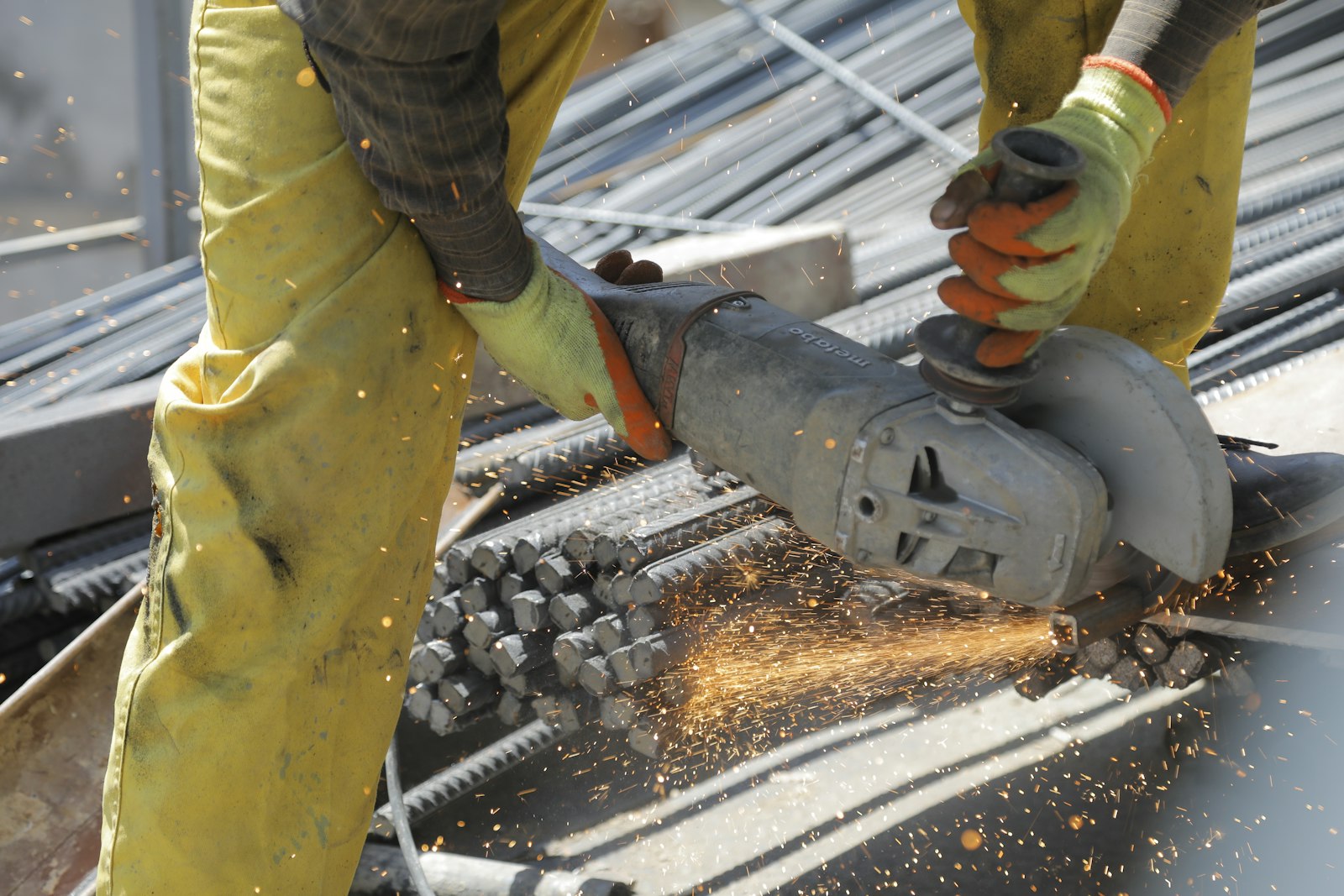
ANSI cut levels run from A1 to A9 under ANSI/ISEA 105. The test uses a rotating circular blade under a controlled load; the result is the load, in grams, that the glove withstands before the blade cuts through. Higher letters mean more resistance, not necessarily a better glove for your job.
The practical mistake is buying the highest level available. Every step up usually adds weight, heat and stiffness, and a glove that is too heavy gets removed at the workstation. The right level is the lowest one that covers the hazard for the duration of the task.
Reviewed · Specs confirmed on the approved sample
A4 means the liner withstood 1,500 g of load in the test. It is a relative comparison between materials, not a promise about a specific blade, speed or angle on your line.
ANSI uses a straight blade under load; EN388:2016 uses a circular blade and reports cut as a 0–5 rating plus a TDM letter A–F. Do not convert one to the other by formula.
Coating, color and cuff do not change the cut level. If two gloves share a liner and gauge, they share the level, regardless of the palm finish.
Reference
Use this as a working reference. Levels are confirmed per style on the sample you approve.
Load values are the test thresholds used to assign each level.
| Level | Load | Relative protection | Typical application |
|---|---|---|---|
| A1 | 200 g | Lowest rated | Light assembly, packing, general handling |
| A2 | 500 g | Light | Warehouse, maintenance, light metal |
| A3 | 1,000 g | Medium | Sheet metal, glass, automotive |
| A4 | 1,500 g | Medium–high | Metal fabrication, recycling, construction |
| A5 | 2,200 g | High | Heavy plate, demolition, scrap |
| A6 | 3,000 g | Very high | Sharps, heavy scrap, glass demolition |
| A7 | 4,000 g | Extreme | Specialist metal and glass tasks |
| A8 | 5,000 g | Extreme | Rare; heavy sharp-edge environments |
| A9 | 6,000 g | Highest rated | Rare; specific high-risk operations |
Buyers serving both markets usually specify the level for each market separately rather than converting.
| Topic | ANSI/ISEA 105 | EN388:2016 |
|---|---|---|
| Cut scale | A1–A9 | 0–5 (Coup test) plus A–F (TDM) |
| Blade | Straight blade, linear pass | Circular blade, rotating |
| Reporting | Single cut level | Four digits plus TDM letter |
| Market | United States | Europe and many export markets |
| Cross-walk | No official conversion | No official conversion |
Questions buyers ask
If your question is about a specific style, send the spec and we will answer with the sample plan instead of a generic reply.
A3 or A4 covers most sheet-metal handling. Choose A4 when edges are burred or the part is heavy enough to slip; A3 is usually enough for light gauge with controlled handling.
Not automatically. A9 gloves are dense and stiff, which increases hand fatigue and reduces the time a worker keeps them on. Use the lowest level that covers the hazard.
No. The cut rating comes from the liner. Coating affects grip, abrasion and liquid resistance, so choose it for the surface, not for the cut number.
When the liner is worn thin at the palm or fingertips, or when the glove no longer passes a visual check for holes. Cut performance drops as the liner abrades, even if the coating still looks intact.
Next step
Share the glove type, liner and coating, quantities and destination. We reply with the sample plan, unit price at your quantity and the packaging options for your market.