Oil stays on the part
Nitrile resists oils and greases, so the glove keeps its grip instead of becoming slick. That is why it is the default for machined parts, maintenance and automotive handling.
Sandy · foam · flat nitrile
The workhorse coating for oil, abrasion and wet-ish handling — sandy, foam or flat, on liners from light assembly to heavy scrap.
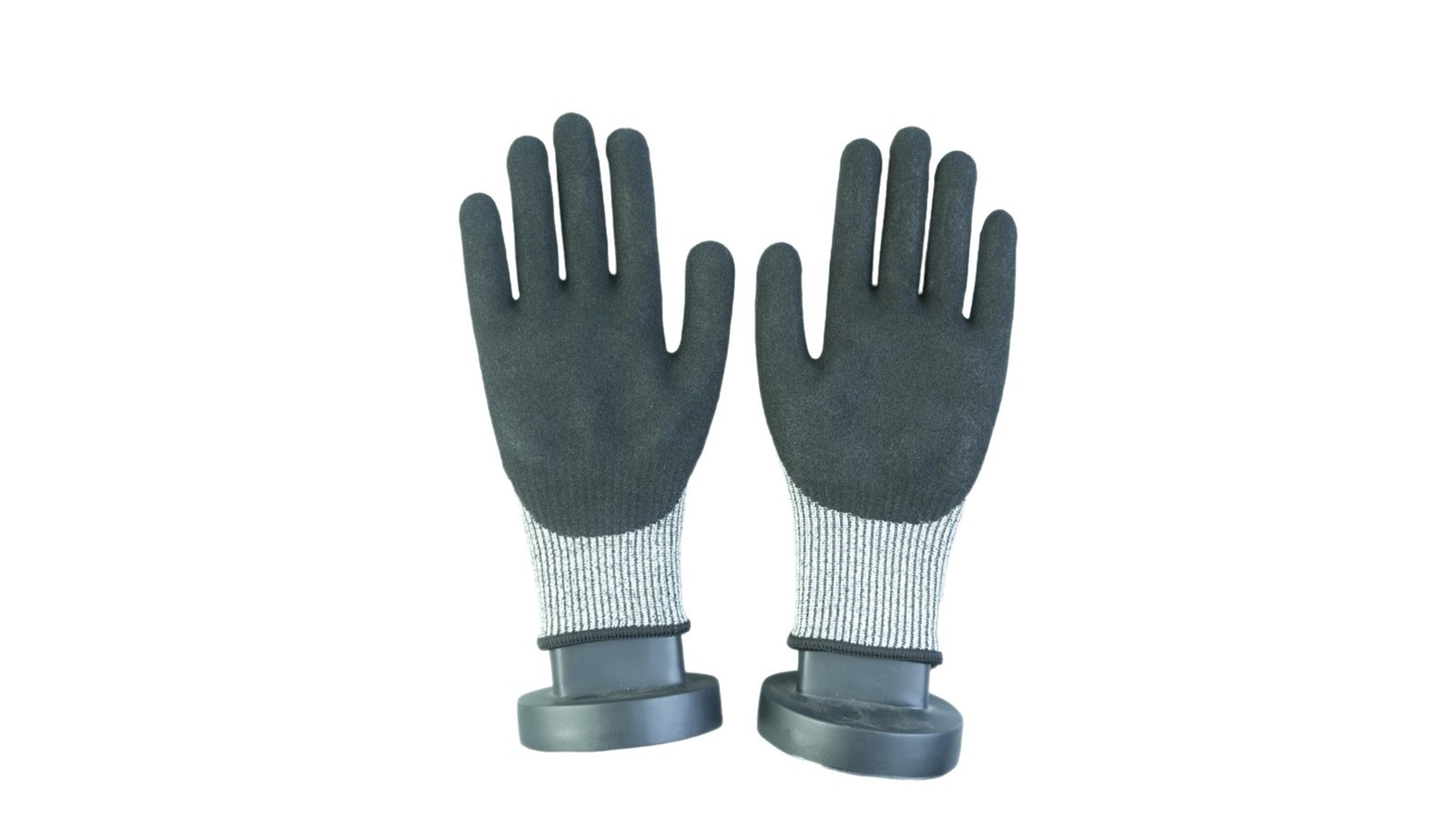
Nitrile coated work gloves earn their place where PU wears out: oily components, abrasive surfaces, coolant, and handling that scuffs the palm all shift. The coating is tougher than PU and resists oil, so grip does not disappear the moment a part comes out of a machine.
Finish matters as much as the chemistry. Sandy nitrile gives the best wet and oily grip, foam is lighter and more breathable, and flat nitrile is the most abrasion-resistant but the least grippy when wet. We pick the finish from your surface, not from a catalogue page.
Size grading matters more on a coated glove than on a leather one, because the liner is knitted to a specific hand length. A glove one size too long bunches at the fingertips, and that slack fabric is the first thing to wear through. Send the size split you issue today and we will match the grading instead of shipping a flat carton.
Reviewed · Specs confirmed on the approved sample
Nitrile resists oils and greases, so the glove keeps its grip instead of becoming slick. That is why it is the default for machined parts, maintenance and automotive handling.
Sandy for wet and oily, foam for dry abrasive handling with more breathability, flat for maximum abrasion life. We sample the finish that matches your wear pattern.
The same nitrile dip can sit on a 13G polyester liner for general handling or an HPPE blend for cut protection. The coating does not limit the cut level you can specify.
Reference
Ratings depend on liner, gauge and coating. Final values are confirmed on the approved sample.
Sandy is the default for oily and wet parts. Foam balances grip and breathability on dry abrasive work, while flat nitrile is kept for heavy abrasion where wet grip is not the priority.
| Finish | Grip when wet | Abrasion | Breathability | Typical use |
|---|---|---|---|---|
| Sandy | Best | High | Medium | Oily parts, outdoor, wet handling |
| Foam | Good | Medium | High | Dry abrasive handling, assembly |
| Flat | Fair | Highest | Low | Heavy abrasion, dry surfaces |
Questions buyers ask
If your question is about a specific style, send the spec and we will answer with the sample plan instead of a generic reply.
A coated glove is a knitted liner with a nitrile palm, made to be worn and reused for handling work. A disposable nitrile glove is a single-use barrier film. They solve different problems and are priced differently.
A coated work glove is not a chemical barrier. For splash and permeation protection you need a dedicated chemical glove with published breakthrough data for the specific substance. Tell us the chemical and we will say whether we can help.
Yes. Nitrile is applied over HPPE or glass-fiber liners to reach ANSI A2–A4. The cut level follows the liner, so specify both the level and the finish.
Yes. Printed polybags, header cards, hang tags and carton marks can all carry your brand. Artwork is confirmed before production, and a pre-production sample is sent for approval.
Next step
Share the glove type, liner and coating, quantities and destination. We reply with the sample plan, unit price at your quantity and the packaging options for your market.