Measure the dominant hand
Measure the hand you work with. Most people have a half-size difference between hands, and the working hand sets the size.
Guide · sizing & fit
Measure the palm, not the fingers: circumference and length in inches and centimeters, with fit notes for each glove family.
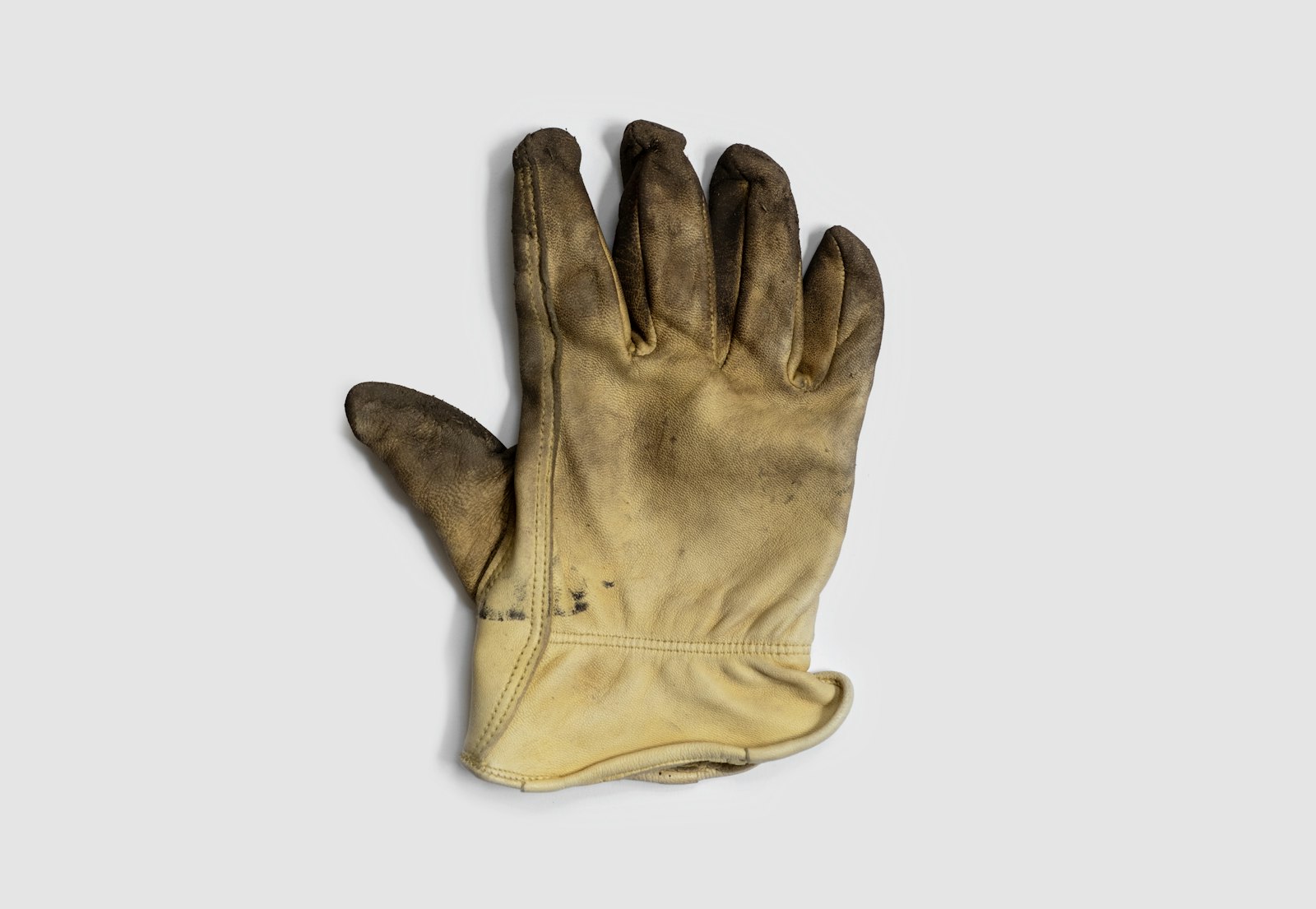
A work glove size chart is set by two measurements: the circumference around the palm just below the knuckles, and the length from the tip of the middle finger to the base of the hand. Sizing systems differ by market, so a US 9 is not automatically a European 9.
Fit also changes with the glove family. A coated knit should be snug at the fingertips with no slack at the palm; leather should allow a little room for seam stretch; insulated gloves need space for the lining without the fingers bottoming out.
Reviewed · Specs confirmed on the approved sample
Measure the hand you work with. Most people have a half-size difference between hands, and the working hand sets the size.
The palm circumference is the primary number. Length confirms the fit, especially for long fingers or a short palm.
Coated gloves fit snug, leather fits with a little room, insulated gloves need clearance for the lining. Use the same chart but adjust for the build.
Reference
Use this as a working reference. Levels are confirmed per style on the sample you approve.
Measure the working hand. If between sizes, go up for insulated gloves and down for coated knit.
| Size | US | Palm circumference | Hand length |
|---|---|---|---|
| XS | 6 | 6.0–6.5 in / 15–17 cm | 6.3–6.7 in / 16–17 cm |
| S | 7 | 6.5–7.0 in / 17–18 cm | 6.7–7.1 in / 17–18 cm |
| M | 8 | 7.0–7.5 in / 18–19 cm | 7.1–7.5 in / 18–19 cm |
| L | 9 | 7.5–8.0 in / 19–20 cm | 7.5–7.9 in / 19–20 cm |
| XL | 10 | 8.0–8.5 in / 20–22 cm | 7.9–8.3 in / 20–21 cm |
| XXL | 11 | 8.5–9.0 in / 22–23 cm | 8.3–8.7 in / 21–22 cm |
Fit changes with the family: coated knit should be snug at the fingertip, leather needs room for seam stretch, and insulated gloves need space for the lining.
| Family | Fit target | Common mistake |
|---|---|---|
| Coated knit | Snug at fingertips, no palm slack | Sizing up for comfort, then losing feel |
| Leather | Snug with slight room for seam stretch | Buying loose, which causes blisters |
| Impact / TPR | Snug; the shell adds bulk | Sizing up twice |
| Insulated | Room for lining, fingertips not tight | Buying the summer size |
| Cut resistant | Snug; slack causes snagging | Buying loose for perceived protection |
Cuff depth is measured from the cuff edge to the wrist crease; overall length runs from the cuff edge to the middle fingertip. Confirm the measurement point on the approved spec.
| Family / cuff | Length (cm) | What it covers |
|---|---|---|
| Short cuff / slip-on | 10 | Light handling with maximum wrist freedom |
| Knit wrist | 18–21 | General handling; debris stays out of the cuff |
| Standard knit or safety cuff | 22–24 | Sheet metal, glass and general industry |
| Extended safety cuff | 25–27 | Forearm splash and scrap |
| Gauntlet | 30–33 | Welding, furnace and wet washdown |
Questions buyers ask
If your question is about a specific style, send the spec and we will answer with the sample plan instead of a generic reply.
Wrap a tape around the palm just below the knuckles, keeping it flat. Then measure from the wrist crease to the tip of the middle finger. Use the circumference to pick the size and the length to confirm it.
For coated knit and cut gloves, size down for a snug fit. For insulated and impact gloves, size up to leave room for the lining and shell.
No. US sizes are typically 6–11; European sizes often use 6–11 as well but the measurements behind them differ. Always check the circumference, not the number alone.
Yes, from 500 pairs per style. Send your size ratio and measurements; we adjust the pattern and confirm on a sample before bulk.
Match length to exposure. A 10 cm cuff is enough for light handling, 18–21 cm knit wrists cover general work, 22–24 cm is the common safety cuff for sheet metal and glass, and 30–33 cm gauntlets are for welding, furnace and washdown work.
Next step
Share the glove type, liner and coating, quantities and destination. We reply with the sample plan, unit price at your quantity and the packaging options for your market.