The level you ask for
We build to the ANSI level, not to a marketing claim. Tell us the level and the task; we propose the liner blend and gauge that reach it without over-building the glove.
ANSI/ISEA 105 cut levels A2–A6
HPPE, glass-fiber and steel blends engineered to a cut level you specify — with the palm that keeps the glove on the hand all shift.
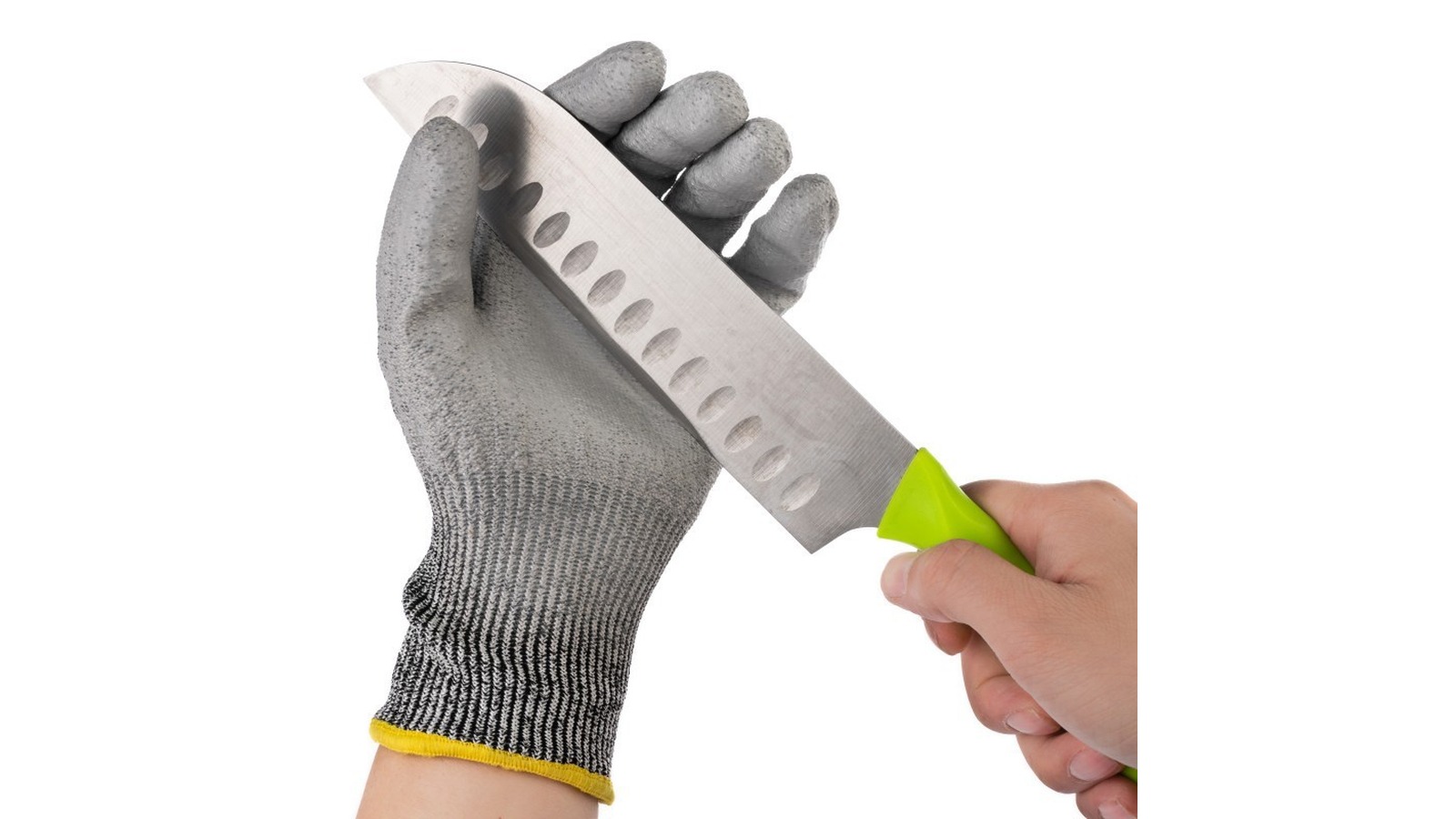
Cut-resistant work gloves get their rating from the liner, not the coating. HPPE (ultra-high-molecular-weight polyethylene) gives the best strength-to-weight ratio, glass fiber adds cut resistance at low cost, and steel or basalt yarns push the top levels. The blend and the gauge decide both the level and how the glove feels.
We quote cut gloves by level first: A2 for light handling, A4 for general sheet metal, A5–A6 for heavy plate and glass. Then we match the palm to the environment — PU for dry feel, nitrile for oil, leather for hot and abrasive surfaces.
Reviewed · Specs confirmed on the approved sample
We build to the ANSI level, not to a marketing claim. Tell us the level and the task; we propose the liner blend and gauge that reach it without over-building the glove.
13-gauge is durable and comfortable for general handling; 15-gauge and 18-gauge give more dexterity for small parts at the same level. Finer gauge costs more and wears faster.
PU for dry precision, sandy nitrile for oily steel, leather for hot plate and rough abrasion. The palm changes grip life, not the cut level.
Reference
Ratings depend on liner, gauge and coating. Final values are confirmed on the approved sample.
Full A1–A9 chart with EN388 cross-reference: see the ANSI cut levels guide.
| ANSI level | Test load | Typical task | Build |
|---|---|---|---|
| A1 | 200 g | Light assembly, packing | Polyester / light HPPE |
| A2 | 500 g | General handling, warehouse | HPPE blend, 13G/15G |
| A3 | 1,000 g | Sheet metal, glass handling | HPPE + glass fiber |
| A4 | 1,500 g | Metal fabrication, recycling | HPPE + glass, 13G |
| A5 | 2,200 g | Heavy plate, demolition | HPPE + steel, reinforced palm |
| A6 | 3,000 g | Sharps, heavy scrap | Dense HPPE + steel, leather palm |
The liner sets the cut level; the coating or patch sets grip, heat and abrasion. Sleeve levels are stated per style.
| Variant | Build | Typical level | Best for |
|---|---|---|---|
| Coated cut, PU | HPPE or glass-fiber knit, PU palm | A2–A4 | Dry assembly, glass, light sheet metal |
| Coated cut, nitrile | HPPE knit, sandy or foam nitrile palm | A2–A5 | Oily steel, recycling, maintenance |
| Steel and wire blend | HPPE plus steel yarn, reinforced palm | A5–A6 | Heavy plate, scrap, demolition |
| HPPE and stainless-steel | HPPE/stainless composite yarn, black sandy nitrile palm | Stated per style | Glass, wood, steel sorting, garden pruning |
| Yarn knit, uncoated | HPPE or glass-fiber knit, knit wrist | A2–A4 | Dry handling in warm environments |
| Leather-patch cut | HPPE liner with cowhide palm | A3–A5 | Hot, rough or abrasive plate |
| Cut-resistant sleeve | HPPE knit tube, 18 in or 24 in | Stated per style | Forearm protection worn with a glove |
Questions buyers ask
If your question is about a specific style, send the spec and we will answer with the sample plan instead of a generic reply.
HPPE gives higher cut levels at lower weight and is the default for most handling gloves. Aramid (Kevlar-type) fibers add heat resistance and are used where sparks or hot surfaces are also present.
Yes, most HPPE and coated styles can be machine-washed cold and air-dried. Avoid bleach and high heat, which degrade the fibers. Washing extends life but does not restore a worn liner.
No. Higher levels usually mean a denser, warmer, stiffer glove. Specify the lowest level that covers the hazard — that is the glove crews will actually keep on.
The level is stated on the approved spec sheet and can be printed on the glove or label as part of your private-label build. Confirm the marking requirement with your order.
Yes, as an add-on to cut glove orders: HPPE knit sleeves in 18 in and 24 in, with elastic ends and an optional thumb slot. The cut level is stated per sleeve style. Tell us the forearm length and whether the sleeve sits under or over the glove cuff.
For cages, wire and sharp edges, yes — an HPPE liner or leather palm helps. They are not bite-rated: teeth load the liner differently from a blade, and no knitted work glove should be sold as bite-proof. Tell us the animal and the handling task and we will quote a cut level and palm that fit, with the limits stated.
Next step
Share the glove type, liner and coating, quantities and destination. We reply with the sample plan, unit price at your quantity and the packaging options for your market.