Rated attenuation
Gel or foam systems are specified to EN ISO 10819 TRM/TRH, so the damping claim has a test behind it rather than a padded palm.
EN ISO 10819 · gel palm
Gel and foam palm systems that damp tool vibration — for grinders, breakers, compactors and saws.
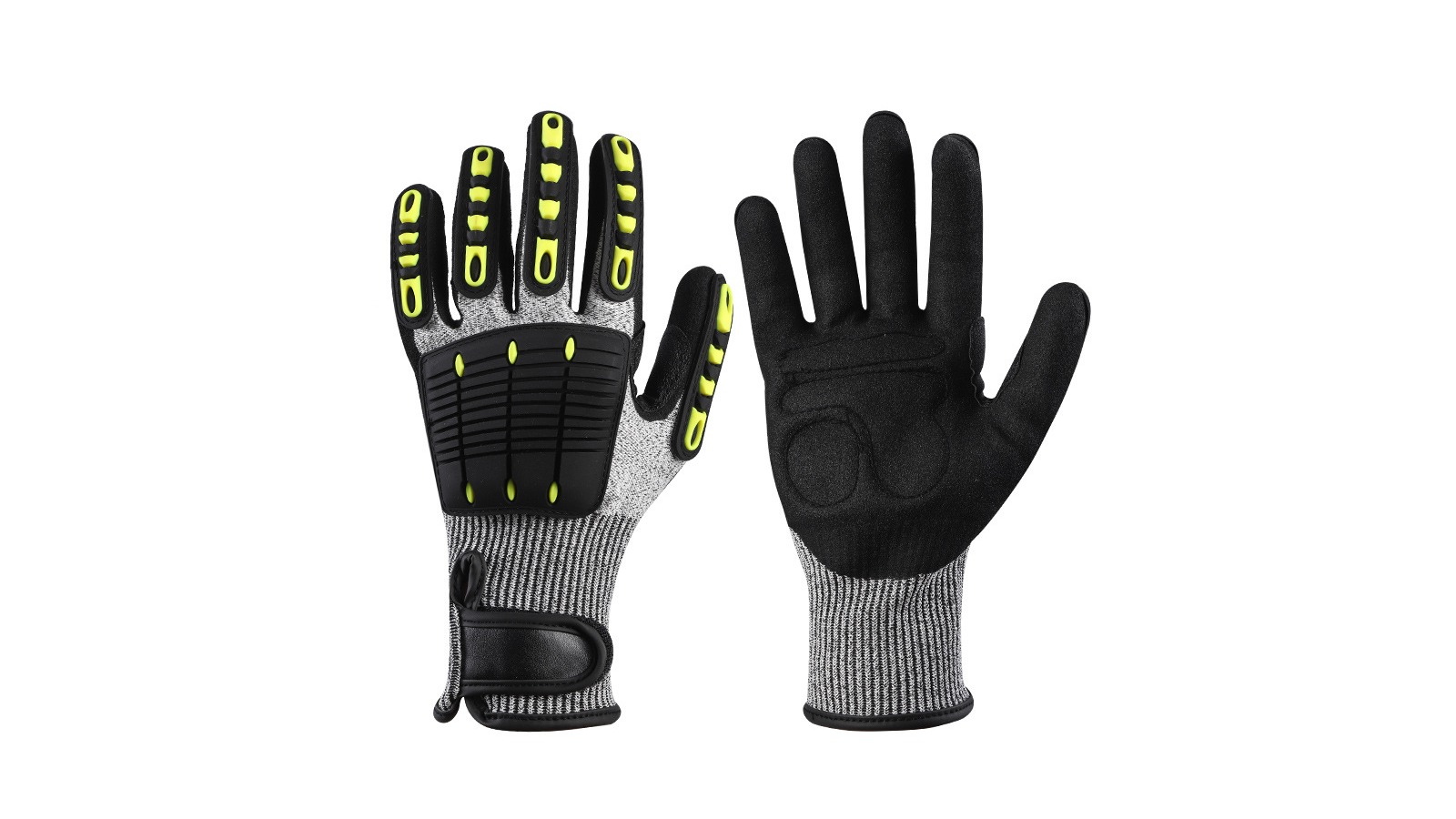
Anti-vibration gloves address hand-arm vibration damage that accumulates over years, and they are only one control among several. A genuine anti-vibration glove uses a viscoelastic pad in the palm and fingers to attenuate vibration at specific frequencies, and is rated to EN ISO 10819 as TRM (medium) or TRH (high).
Padding alone is not enough. The glove must also keep grip and dexterity, because a worker who cannot hold the tool safely will grip harder, which increases exposure. We build AV gloves on a knit or leather base with a gel palm and reinforced thumb.
Vibration injuries build slowly, so the glove is only one part of the control. What a glove can do is damp the high-frequency component that reaches the hand and let the worker keep a relaxed grip, which is why the damping material sits between the palm and the tool rather than over the whole hand. Give us the tool, the trigger time and the shift length, and we will match a pad thickness. For long exposure, rotation and tool selection matter more than any glove.
Reviewed · Specs confirmed on the approved sample
Gel or foam systems are specified to EN ISO 10819 TRM/TRH, so the damping claim has a test behind it rather than a padded palm.
A nitrile or leather palm over the gel keeps grip on handles and reduces the tendency to over-grip, which is a major part of vibration exposure.
Full-finger gel for breakers and compactors, palm-only padding for grinders where fingertip feel matters, and a leather version for chainsaws.
Reference
Ratings depend on liner, gauge and coating. Final values are confirmed on the approved sample.
Gloves reduce but do not eliminate vibration exposure. Tool selection, trigger time limits and job rotation remain the primary controls.
| Tool | Build | Padding | Note |
|---|---|---|---|
| Angle grinder | Nitrile palm, knit back | Palm gel | Fingertip feel retained |
| Road breaker | Leather palm, full gel | Full-finger gel | Heavy damping, lower feel |
| Plate compactor | Leather or nitrile | Palm + finger gel | Grip on vibrating handle |
| Chainsaw | Leather, left-hand protection | Palm gel | Check chainsaw-specific requirements |
| Impact driver | Thin PU, no AV rating | None | Not an AV glove |
Questions buyers ask
If your question is about a specific style, send the spec and we will answer with the sample plan instead of a generic reply.
Rated gloves attenuate vibration at defined frequencies, but they are a secondary control. Reducing trigger time, using lower-vibration tools and rotating tasks matter more than the glove alone.
EN ISO 10819 classifies vibration attenuation as medium (TRM) or high (TRH) based on measured transmission. Higher is not automatically better if it makes the glove too stiff to grip safely.
They are intended for vibrating-tool tasks, not all-day wear. Gel padding traps heat and reduces feel, so issue them for the specific task and pair them with exposure limits.
Some builds are A2–A3. If the task also involves sharp edges, specify the cut level alongside the vibration rating.
Next step
Share the glove type, liner and coating, quantities and destination. We reply with the sample plan, unit price at your quantity and the packaging options for your market.